






Analytical skills are the ability to collect information, understand patterns, solve problems, and make better decisions at work. These skills are useful across almost every role, from finance and marketing to human resources, healthcare, operations, and technology.
In the workplace, analytical thinking helps you break down complex issues, compare options, use data wisely, and explain your findings clearly. Employers value these skills because they support smarter decision-making, better planning, and faster problem-solving.
This article explains the meaning of analytical skills, key examples, why they matter at work, how to improve them, and how to show them on your resume and during interviews.
Key Takeaways
- Analytical skills help people understand information, solve problems, and make logical decisions.
- Examples of analytical skills include critical thinking, research, data analysis, decision-making, and problem-solving.
- These skills are valuable in almost every profession, including finance, marketing, healthcare, HR, operations, and technology.
- Employers look for analytical thinking because it improves efficiency, innovation, and business decision-making.
- Analytical skills can be developed through reading, case studies, data analysis, and practical problem-solving.
- You can demonstrate analytical skills through your resume, work experience, and interview responses.
What Are Analytical Skills?
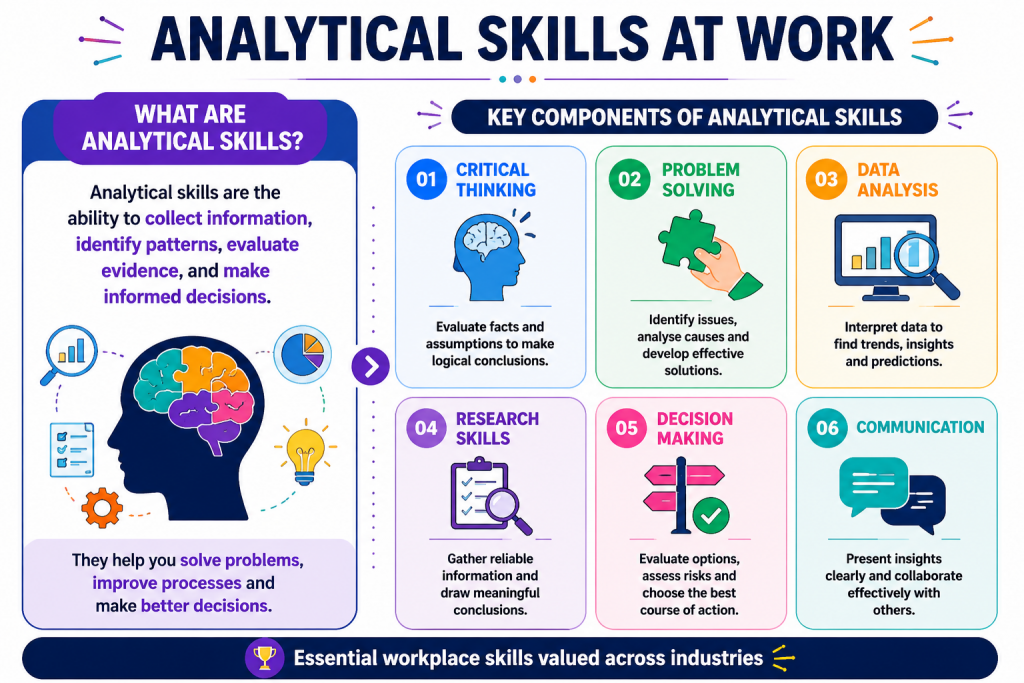
Analytical skills are the abilities that help people collect information, evaluate facts, identify patterns, and solve problems logically. These skills enable professionals to break down complex situations into smaller parts, understand relationships between different factors, and make informed decisions based on evidence rather than assumptions.
Analytical thinking is used to interpret data, assess risks, improve processes, and develop effective solutions. Whether you work in finance, marketing, healthcare, human resources, project management, or technology, strong analytical abilities can help you make better decisions and achieve better outcomes.
Common examples of analytical skills include critical thinking, problem-solving, research, data analysis, logical reasoning, and decision-making. These skills are among the most sought-after qualities employers look for when hiring candidates.
Wondering, ‘What are analytical skills?’ Analytical skills include various mental capabilities that allow people to tackle difficulties in an organized and proper way. These abilities are about dividing big problems into tinier, easier parts. It is about being able to see connections and make sensible deductions. Also, people who think analytically well can combine information and consider various viewpoints. They can use critical thinking to reach proper conclusions.
What do analytical skills include?
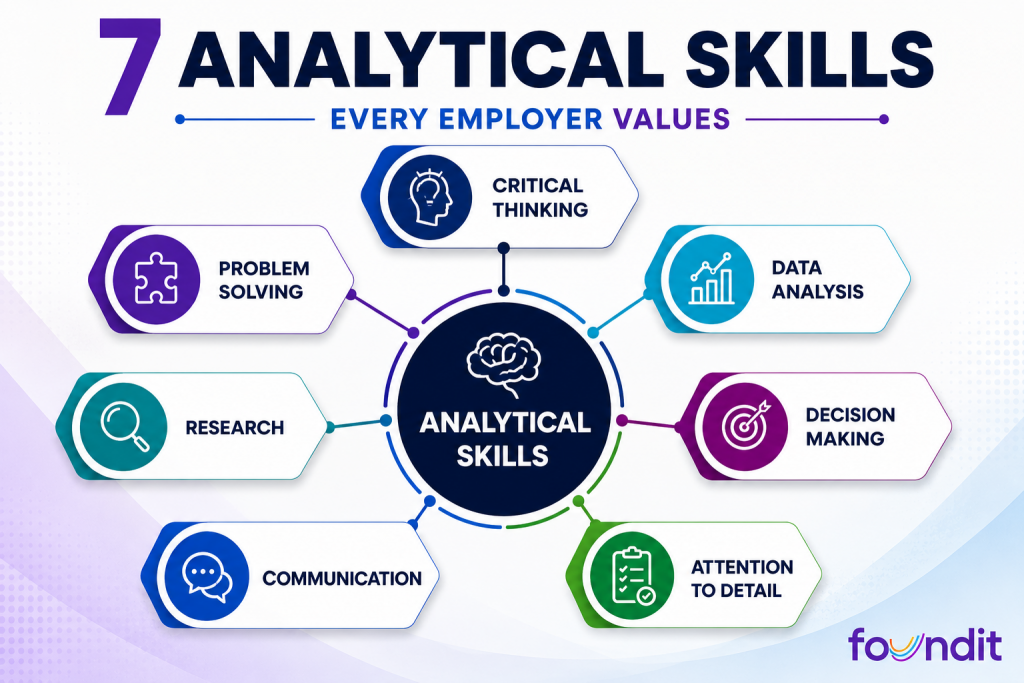
- Critical thinking
- Problem-solving
- Research and investigation
- Data analysis and interpretation
- Logical reasoning
- Decision-making
- Communication and presentation
- Attention to detail
- Risk assessment
- Strategic thinking
Analytical skills definition in simple words
In simple terms, analytical skills are the ability to understand information, identify problems, and make logical decisions. They help people think critically, evaluate options, and find practical solutions in everyday work situations.
Read Also: Best Skills to Put on Resume for New Grads [Top 50]
Key Components of Analytical Skills
1. Critical Thinking
Critical thinking involves evaluating information objectively and questioning assumptions before reaching conclusions. Professionals with strong critical thinking skills can assess multiple perspectives, distinguish facts from opinions, and make sound judgments based on evidence.
2. Problem-Solving
Problem-solving refers to the ability to identify challenges, analyse possible causes, and develop effective solutions. It helps professionals overcome obstacles, improve processes, and achieve better outcomes in their work.
3. Data Analysis
Data analysis involves collecting, organising, and interpreting information to uncover trends and insights. In today’s workplace, the ability to work with data helps organisations make informed decisions and improve performance.
4. Research Skills
Research skills enable professionals to gather reliable information, evaluate sources, and draw meaningful conclusions. These skills support better planning, decision-making, and strategic thinking.
5. Decision-Making
Decision-making is the ability to evaluate alternatives and choose the most appropriate course of action. Strong analytical thinkers consider available information, assess risks, and make decisions that align with their goals and priorities.
Read Also: Soft Skills: Definitions, Importance, and Examples
Types of Analytical Skills
Analytical skills consist of several related abilities that help professionals evaluate information, solve problems, and make informed decisions. Depending on the role and industry, some analytical skills may be used more frequently than others.
Logical Reasoning
Logical reasoning is the ability to connect facts, identify relationships, and draw conclusions based on evidence. It helps professionals evaluate situations objectively and avoid assumptions.
Attention to Detail
Attention to detail helps people identify errors, inconsistencies, and opportunities for improvement. This skill is especially valuable in finance, quality control, healthcare, and project management.
Decision-Making
Decision-making involves evaluating alternatives, assessing risks, and selecting the most suitable solution. Effective decision-making supports productivity and long-term business success.
Communication
Strong analytical thinkers must be able to explain findings clearly. Communication skills help professionals present insights, support recommendations, and collaborate effectively with teams.
Forecasting
Forecasting involves using available information and historical trends to predict future outcomes. Businesses rely on forecasting for budgeting, resource planning, and strategic decisions.
Risk Assessment
Risk assessment helps professionals identify potential challenges and evaluate their impact. It allows organisations to minimise losses and prepare for uncertainties.
| Type of Analytical Skill | Example of Use |
|---|---|
| Logical Reasoning | Evaluating options before making decisions |
| Attention to Detail | Finding errors in reports or documents |
| Decision-Making | Selecting the best solution to a problem |
| Communication | Explaining insights to colleagues and stakeholders |
| Forecasting | Predicting future sales or demand |
| Risk Assessment | Identifying possible threats and opportunities |
Why Are Analytical Skills Important in the Workplace?
Analytical skills help professionals make informed decisions, solve problems efficiently, and adapt to changing business requirements. In today’s data-driven workplace, employers value analytical thinking because it improves productivity, reduces risks, and supports long-term growth.
Better Decision-Making
Strong analytical abilities enable professionals to evaluate information objectively and choose solutions based on evidence rather than assumptions. Better decisions often lead to improved business outcomes and higher efficiency.
Improved Problem-Solving
Analytical thinking helps individuals identify the root causes of problems and develop practical solutions. This ability is valuable when dealing with workplace challenges, customer issues, or operational inefficiencies.
Greater Efficiency and Productivity
Professionals with strong analytical skills can streamline processes, eliminate unnecessary tasks, and improve resource utilisation. This contributes to higher productivity and better organisational performance.
Innovation and Continuous Improvement
Analytical thinking encourages people to examine existing methods and identify opportunities for improvement. This supports innovation and helps organisations remain competitive.
Risk Assessment and Planning
Analytical skills help professionals assess risks, evaluate alternatives, and prepare for uncertainties. Businesses use analytical thinking to support planning, forecasting, and strategic decisions.
Risk Assessment and Planning
Analytical skills help professionals assess risks, evaluate alternatives, and prepare for uncertainties. Businesses use analytical thinking to support planning, forecasting, and strategic decisions.
| Benefit of Analytical Skills | Impact in the Workplace |
|---|---|
| Better Decision-Making | Supports informed choices |
| Problem-Solving | Helps resolve challenges effectively |
| Efficiency | Improves productivity and processes |
| Innovation | Encourages new ideas and improvements |
| Risk Management | Supports planning and forecasting |
Read Also: Top 20 Professional Skills for Success at Workplace
Analytical Skills Examples in Different Jobs
Analytical skills are used across industries to solve problems, interpret information, and support decision-making. While the specific application varies by profession, the ability to think logically and draw insights from information is valuable in almost every job.
Finance and Accounting
Financial professionals use analytical skills to evaluate reports, identify trends, assess risks, and make investment or budgeting decisions. Accountants and analysts often rely on data interpretation and forecasting to support business performance.
Marketing
Marketers analyse customer behaviour, campaign performance, and market trends to improve strategies. Analytical thinking helps them understand what drives engagement and optimise marketing efforts.
Project Management
Project managers use analytical skills to allocate resources, evaluate risks, monitor timelines, and resolve issues. These abilities help ensure projects are completed efficiently and within budget.
Human Resources
HR professionals analyse employee feedback, hiring metrics, and workforce trends to improve recruitment, retention, and employee satisfaction.
Healthcare
Doctors, nurses, and healthcare administrators use analytical thinking to interpret medical data, diagnose conditions, evaluate treatments, and improve patient outcomes.
Supply Chain and Operations
Operations professionals rely on analytical skills to forecast demand, optimise inventory levels, and improve efficiency throughout the supply chain.
Technology and Data Analytics
IT specialists and data analysts use analytical thinking to identify patterns, troubleshoot issues, interpret datasets, and support data-driven decisions.
| Profession | How Analytical Skills Are Used |
|---|---|
| Finance | Budgeting, forecasting, risk analysis |
| Marketing | Campaign analysis and customer insights |
| Project Management | Planning, resource allocation, risk assessment |
| Human Resources | Recruitment and employee analytics |
| Healthcare | Diagnosis and treatment decisions |
| Operations | Inventory management and process improvement |
| Technology | Data analysis and problem-solving |
Read Also: Best 5 Skills Every Graduate needs for Professional Growth
How to Improve Analytical Skills
Like any professional skill, analytical skills can be strengthened with regular practice and the right approach. Developing these abilities can help you make better decisions, solve problems more effectively, and perform confidently in the workplace.
Develop a Habit of Asking Questions
Strong analytical thinkers do not accept information at face value. They ask questions, examine assumptions, and look for evidence before reaching conclusions. Building curiosity helps improve critical thinking and decision-making.
Practice Solving Real Problems
Working on practical challenges, case studies, or workplace projects helps you analyse situations and evaluate different solutions. Real-world experience is one of the most effective ways to sharpen analytical abilities.
Strengthen Your Data Interpretation Skills
Learning to read charts, reports, and performance metrics can improve your ability to identify patterns and make evidence-based decisions. Even basic spreadsheet skills can strengthen analytical thinking.
Read Widely and Continuously Learn
Books, research papers, industry reports, and online courses expose you to different perspectives and improve your ability to evaluate information critically.
Seek Feedback and Reflect on Decisions
Reviewing your decisions and learning from feedback can help you recognise patterns, avoid repeated mistakes, and continuously improve your analytical thinking.
Use Analytical Tools and Technologies
Tools such as Microsoft Excel, Google Sheets, Power BI, Tableau, SQL, and Python can help professionals analyse information more effectively. Familiarity with these tools is increasingly valuable across industries.
| Ways to Improve Analytical Skills | Benefit |
|---|---|
| Ask Questions | Encourages critical thinking |
| Solve Real Problems | Builds practical experience |
| Interpret Data | Supports better decisions |
| Continuous Learning | Expands knowledge and perspectives |
| Seek Feedback | Promotes self-improvement |
| Learn Analytical Tools | Strengthens workplace readiness |
Read Also: How to Improve Analytical Skills [Steps and Benefits]
How to Show Analytical Skills on a Resume and During Interviews
Having strong analytical skills is valuable, but employers also want to see evidence of those abilities. Highlighting analytical thinking effectively on your resume and during interviews can improve your chances of securing a job.
Highlight Achievements Instead of Simply Listing Skills
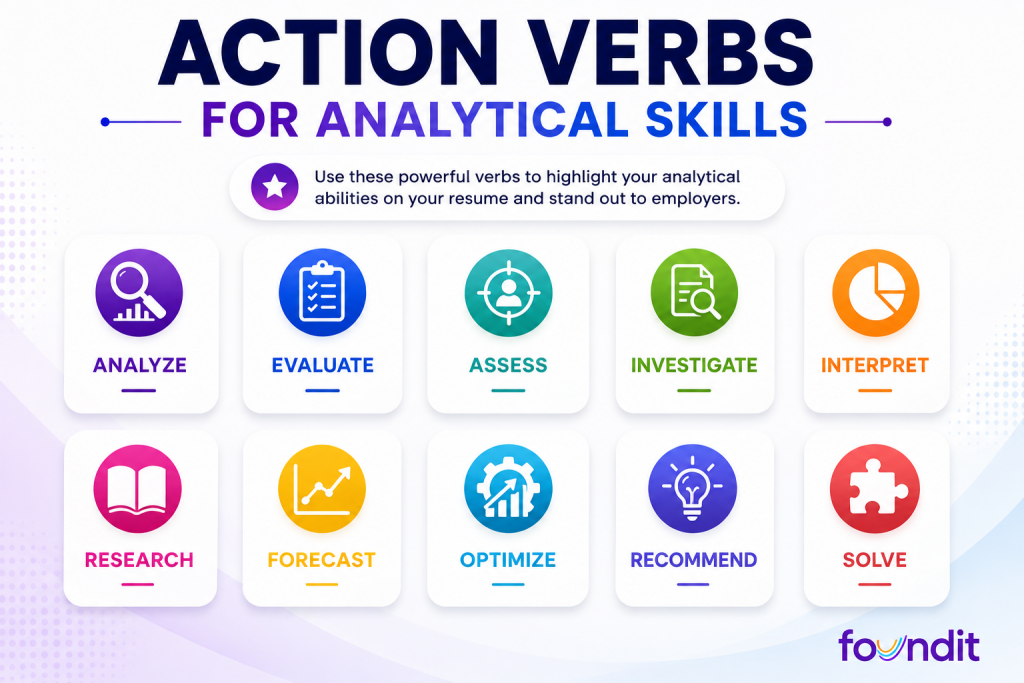
Rather than mentioning “analytical skills” as a keyword, demonstrate how you used analytical thinking to solve problems, improve efficiency, or support business decisions. Specific examples make your resume stronger and more credible.
Examples of Analytical Skills on a Resume
Analyzed customer feedback trends and improved retention by 15%.
Conducted market research to support product strategy and identify growth opportunities.
Evaluated financial reports and identified cost-saving opportunities.
Used data analysis to improve operational efficiency and reduce delays.
Read Also: What is a Resume: Types, Tips and Best Samples
Demonstrate Analytical Thinking During Interviews
Interviewers often assess analytical skills by asking candidates to explain how they approached challenges, evaluated information, and made decisions. Use real examples from projects, internships, or previous roles to show your problem-solving abilities.
Common Interview Questions Related to Analytical Skills
- Tell me about a time when you solved a problem using data.
- Describe a difficult decision you had to make and how you approached it.
- Give an example of a challenge where you had to analyse information before taking action.
- How do you prioritise when faced with multiple problems?
- How do you ensure the accuracy of your decisions?
| Where to Demonstrate Analytical Skills | Example |
|---|---|
| Resume | Show measurable achievements |
| Cover Letter | Explain how you solved problems |
| Interview | Share examples from projects or work experience |
| LinkedIn Profile | Highlight analytical accomplishments |
Read Also: Top Soft Skills Employers Want in 2026
Analytical Skills Tools Used in the Workplace
Modern workplaces rely on various tools to collect, analyse, and visualise information. While analytical thinking remains the foundation, familiarity with these tools can help professionals make data-driven decisions and improve efficiency.
Microsoft Excel
Microsoft Excel is one of the most widely used analytical tools across industries. Professionals use it for organising data, creating reports, performing calculations, and identifying trends.
Google Sheets
Google Sheets enables teams to collaborate on spreadsheets in real time. It is commonly used for tracking metrics, analysing data, and sharing reports.
Power BI
Power BI helps organisations convert raw information into interactive dashboards and visual reports. It is widely used in finance, operations, and business analytics.
Tableau
Tableau is a popular data visualisation platform that helps professionals identify patterns and communicate insights more effectively.
SQL
SQL is used to retrieve, manage, and analyse information stored in databases. Data analysts, software developers, and business intelligence professionals frequently use SQL for decision-making.
Python
Python is a programming language commonly used in data analytics, machine learning, automation, and statistical analysis. It enables professionals to work with large datasets and build analytical models.
| Tool | Primary Use |
|---|---|
| Microsoft Excel | Data organisation and reporting |
| Google Sheets | Collaboration and spreadsheet analysis |
| Power BI | Dashboards and business intelligence |
| Tableau | Data visualisation |
| SQL | Database analysis and querying |
| Python | Data analytics and automation |
Read Also: How to Create Job Application Email
Analytical Skills vs Critical Thinking vs Problem-Solving
The terms analytical skills, critical thinking, and problem-solving are often used interchangeably, but they are not exactly the same. While they are closely connected, each skill serves a different purpose in the decision-making process.
What Are Analytical Skills?
Analytical skills involve gathering information, identifying patterns, evaluating evidence, and drawing conclusions. They help professionals understand complex situations and make informed decisions.
What Is Critical Thinking?
Critical thinking focuses on questioning assumptions, evaluating arguments, and assessing information objectively. It helps people avoid biases and make reasoned judgments.
What Is Problem-Solving?
Problem-solving is the ability to identify challenges, analyse possible causes, and implement practical solutions. It focuses on taking action to resolve issues and achieve desired outcomes.
| Skill | Main Focus | Example |
|---|---|---|
| Analytical Skills | Understanding information and patterns | Interpreting sales trends |
| Critical Thinking | Evaluating assumptions and arguments | Assessing the reliability of information |
| Problem-Solving | Finding and implementing solutions | Resolving customer complaints |
In simple terms: Analytical skills help you understand information, critical thinking helps you evaluate it, and problem-solving helps you act on it.
Read Also: How to Improve Critical Thinking Skills (With Examples)
Common Mistakes That Weaken Analytical Thinking
Improving analytical skills is not only about learning new methods. It also means avoiding habits that lead to poor decisions, weak conclusions, or incomplete problem-solving.
Relying on assumptions
One common mistake is making decisions based on assumptions instead of facts. Good analytical thinking starts with checking evidence before reaching a conclusion.
Ignoring context
Information can be misleading when viewed without context. Professionals should consider timelines, business goals, user behaviour, and external factors before interpreting results.
Focusing only on data
Data is useful, but it does not always show the full picture. Strong analytical thinkers combine data with business understanding, user feedback, and practical judgment.
Jumping to conclusions too quickly
Quick decisions can sometimes miss important details. Taking time to compare options and review evidence helps avoid weak or incomplete conclusions.
Not communicating findings clearly
Analysis is useful only when others can understand it. Professionals should explain insights in simple language and connect them to clear actions or recommendations.
| Mistake | Better Approach |
|---|---|
| Relying on assumptions | Check facts and evidence |
| Ignoring context | Review the full situation |
| Focusing only on data | Combine data with judgment |
| Jumping to conclusions | Compare options before deciding |
| Poor communication | Present insights clearly |
Read Also: 10 Essential Decision-Making Skills With Examples
FAQs
Analytical skills are not limited to naturally gifted individuals. While some people may find analytical thinking easier, these skills can be developed through practice, continuous learning, problem-solving, and exposure to real-world situations.
Analytical skills are valuable across almost every profession. Roles in finance, marketing, project management, healthcare, human resources, consulting, operations, engineering, and data analytics rely heavily on the ability to interpret information and make informed decisions.
Freshers can showcase analytical skills through academic projects, internships, case studies, certifications, research work, volunteer activities, or extracurricular experiences. Employers often look for how candidates approach problems rather than just years of experience.
Analytical skills focus on understanding information, identifying patterns, and making decisions, whereas technical skills refer to specific knowledge or tools required for a job, such as Excel, Python, SQL, or graphic design software. Both types of skills complement each other in the workplace.
Some of the most sought-after analytical skills include critical thinking, problem-solving, decision-making, research, data analysis, communication, attention to detail, and strategic thinking. These skills help professionals solve complex challenges and improve business outcomes.
Employers often evaluate analytical abilities through behavioural questions, case studies, aptitude tests, and problem-solving scenarios. Candidates may be asked to explain how they handled a difficult situation, interpreted data, or made an important decision.
Yes. Leaders use analytical thinking to assess risks, evaluate opportunities, allocate resources, and make strategic decisions. Strong analytical skills help managers and executives guide teams more effectively and respond to changing business conditions.
Books on critical thinking, problem-solving, behavioural psychology, and decision-making can help strengthen analytical abilities. Online courses, case studies, industry reports, and hands-on projects are also effective ways to develop analytical skills over time.
 Beware of Scammers
